
One of the trickiest aspects of enjoying hot springs and (commercial) spa's in general is how to blend in, each county having different 'rules'. Naturally Thailand has it's own.
Others add: 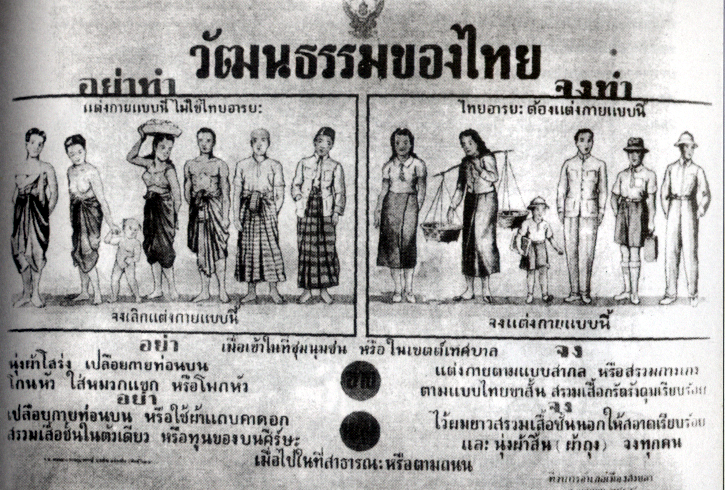
However the way Thai enjoy their hot springs are very rule free, so it seems. It's nothing like the rules set in Northeast Asia nor the different conventions in Europe. Failing any specific guideline for enjoying hot springs in Thailand, what follows are this blogs view of what the rules are and the the background to these rules.
In general, Thai never take a shower before hitting the hotter springs, don't ask me why. Otherwise extremely meticulous in cleanliness matters, the Thai attitude to hot springs (and bathing in natural water bodies in general) seems quite the opposite. No showering, no cleaning, that's not too difficult to remember.
Though this aspect might be OK for lakes, sea's and rivers, I can imagine some are already put off soaking. Therefore I ask you not to proceed ...
Bathing attire in Thailand is nearly non-existent. But not in the sense that the Thai love a skinny dip, it's quite the opposite. Taking the waters means doing so fully clothed! In some cases you will see soakers change on forehand, but most continue to jump in with the same clothes they have been using all day. Yuck! Quite unThai.
Therefore it's advisable to avoid well visited bathing places, the water can only be a cesspool. Remember that sanitary quality is at it's best, very poor here.
Therefore it's advisable to avoid well visited bathing places, the water can only be a cesspool. Remember that sanitary quality is at it's best, very poor here.
But when researching for this article I can across many websites of famous commercial spa's where nudity is de-rigeur. Six Senses, Katathani, Banyan Tree and Pimalai (as examples) all have photo's featuring naked (but tastefully avoiding anything revealing) local ladies (what about us gents?). So can one conclude that such practice only exist on private land?
Probably. Even toplessness (but naturally (not!) this only applies to half of the world population) can be prosecuted if taking place on/in a Thai National Park.
Looking into the etiquette of bathing in general the following (from Wikitravel) is an often repeated paragraph:
Looking into the etiquette of bathing in general the following (from Wikitravel) is an often repeated paragraph:
'Swimsuits should not be revealing — many Thais swim in full clothing. Women should never go topless on the beach, especially beaches in national parks, as this is illegal and most Thais consider it offensive in the extreme. Women are sometimes advised to wear a T-shirt over their swimming gear; this is more important at primarily-Thai beach resorts, and will be almost entirely ignored at the most heavily westernized areas'.Couchsurf:
'When swimming at the non tourist areas it would be polite for women to wear shorts and a t-shirt, not bikini'.
'Now imagine this, Thais don't sunbathe topless, in fact they don't sunbathe at all, if they did you can bet it wouldn't be topless. Imagine what they would think seeing you with your breasts exposed to the world, or worse still, going for a skinny dip!'
Asiatours.net:
A faux-pas possibly, but not necessarily a cultural one. From Thaivisa.com forum:
'Revealing clothing, worn by either men or women, is a little disgusting to most Thais. Short shorts, low cut dresses and T-shirts and skimpy bathing suits come into this category. Shorts are considered improper and low-class attire in Thailand, only acceptable for schoolchildren, street beggars, and common laborers …not wealthy tourists! Except at beach resorts, you should never wear skimpy shorts, halter tops, low-cut blouses, or anything else that will offend the locals'.Or into.asia.com:
'Is it okay to go topless / nude on beaches in Thailand ? This is frowned upon in Thai culture, and you will almost never see a Thai doing it. Nevertheless, going topless on some beaches on Ko Samui, Phuket, Ko Pha-Ngan and other very touristy islands is commonplace. The locals here are used to foreigners and don't care so much. In less touristy places, particularly where there are Thai families on holiday, it is considered rude and offensive. Going nude at beaches is illegal in Thailand, and is impossible pretty much everywhere. If you really want to do this, your best bet is to find somewhere remote where you are not sure not to be seen'.These all lead you to believe that even wearing bathers would mean a cultural faux-pas. But is that really the case?
A faux-pas possibly, but not necessarily a cultural one. From Thaivisa.com forum:
'Against Thai culture? So a topless statue and this mural at the Grand Palace are no longer appropriate? It was only 50-60 years ago, when Thais were being persuaded to move away from their "topless culture" to dress more Western. ...
So 50 years ago, we have a government encouraging Thai women to put their shirts on. Today we have culture 'experts' trying to tell you that it's in line with "Thai Culture" to dress modestly'.
'A Thai government poster from the Marshal Plaek PibulsonggramLeft walking around in a lungi (man and woman topless) not allowed anymore.
era (1938-1945) promoting the "civilized" form of dress'.
One can imagine that back in the time before the poster was printed bathing au-naturel had little of the supposedly cultural baggage it has nowadays. Probably there are still remote villages where bathing in the river (half) naked still takes place. At least I know this is not uncommon in neighbouring Lao which shares a similar cultural.
This (dissenting) voice is re-inforced through the very good Thaiworldview website. In this posting it produces a number of examples of how woman's dress is on the agenda in recent politics, though the views of the government represent a conservative view whereas the modern status is:
'Dressing is an individual's right'.Elsewhere the author states:
'Skin darkness is not appreciated by Thai people because it is the symbol of the peasant. If one has its skin dark it means that he is working outside. Symbol of beauty is the skin whiteness that is why Chiang Mai girls are so reputed for their beauty. On the contrary "ISAN" women (northeastern part of Thailand), particularly near Cambodia, are not in the standard of the beauty because they have a dark skin. A Thai proverb says "black as a Cambodian". Thai people are puzzled by topless foreigner women on the beach. A normal Thai woman never has such a behavior!'So not cultural nor religious. It also has racial connotations. Though we could argue that these are his (and my) personal views, the site receives much positive feedback.
And it draws parallels with the study on Bali, Paradise Created by Adrian Vickers, in which he explains how social elites try to distinguish themselves by imitating the then colonial elite and refraining from over exposure by the sun. Thus the lighter one was, the more one was to be part of the elite, i.e. one is not working on the land. This elitism though eventually trickles through the society and refraining from nudity thus becomes the local folklore. However with the advent of tourism, the dress code of the visitors is now reversing this, the less one dresses the more one is showing off that one does not need to work for money and as such this would be the new form of elitism.

So where does this bring us? Unfortunately not very far. The local Thai practice is to soak clothed and anything can be frowned upon, though it's not culturally, nor religous. We can expect changes to happen as affluency permeates the society and western views of society lead to change.'Many of the places where I have traveled in Asia, such as Bali and Thailand, seem to be modest and have dress codes where your shoulders and feet must be covered in certain situations, yet women there can be seen walking bare-breasted down the street. It does not seem to be sexual to anyone but foreign tourists from repressed countries'.
Public hot spring sites are to be taken clothed, the degree to which is dependent on the individual.There is an alternative though, most hot spring sites in Thailand rent out individual cubicles, mostly claustrophobic they contain a tub which gets filled once one pays for the use. Thus one can still take the waters as one would take a bath at home. At least that's my train of thought. However I suspect that groups rent these facilities not to enjoy a fun time letting their hair down, but to avoid having to enjoy the public facilities and thus guaranteed of more sanitary conditions ...
From Kats' Window (on Burma and Thailand) a posting entitled Mind your Manners
From Kats' Window (on Burma and Thailand) a posting entitled Mind your Manners
'Thankfully, Thai people are the most non-aggressive, friendly, and accepting bunch I have ever come across and are experts at acceptance. When half-naked sunburned backpackers roll into town, it looks extremely bizarre. When visitors have a day of fun sunbathing naked in Muslim areas of Thailand, Thais are not so rude as to point and laugh. But they are disturbed. They view these visitors to their country as being rude. The other side of the coin is that the visitors have money, and money is really important. Millions of tourists bring millions of dollars and are tolerated all the more because of this'.
Though I might have had a private naked dip in one of the aforementioned cubicles, rest assured never in a public hot spring. Then again I have often made use of solitary waterholes (rivers, waterfalls) to enjoy Thailand's natural surroundings as natural as possible. Unseen!
A final thought:
'Can skinny dipping save the planet?
The Bite:
Believe it or not, it helps. Swimsuits require energy and transport to produce, while birthday suits require none. But if swimming in the buff just isn't your style, try on some eco-swimwear for size...
The Benefits:
- Sexy style. Give Sports Illustrated's swimsuit models a run for their money in eco-bikinis. Planet-friendly.
- Eco-suits are made from organic and recycled materials, and 1 lb of organic cotton averts 1/3 lb of pesticides and fertilizers.
- Eco-suits offer an eco-friendly, non-nudist way to keep sand from getting into uncomfortable places'.
Btw: Did anyone notice that the to be broadcasted Canadian travel programme , Skinny Dip, has nothing on Thailand nor on Southeast Asia ...


